My introduction to Teenage Engineering came with glimpses on YouTube videos of their original OP-1 synthesizer in TikTok videos and YouTube Shorts, more as a marvel at a price point that seemed to defy sensibility. Further items that came across my algorithms were their ludicrous grip car or their over-engineered radio which again reiterated the imbalance of usefulness to price and how unlikely I would ever even be able to consider purchasing one of them.
But then I got a Playdate, a device that was affordable but still whimsical, designed by the same company whose products I had long assumed were unobtainable. With the easy access to its SDK and programming languages matched with its limited hardware set, creativity has able to blossom and developers have been able to achieve a variety of stunning applications on this little handheld device.
I started seeing clips of programs made by Orllewin, a prolific developer of music-based programs for the Playdate. I was quite intrigued to see complicated systems running on the device, though I could tell its physical interface was likely to be a greater hinderance than what I would want to accept.
I have struggled for years to find an instrument or hardware that I could use to get the music and beats I had made in my head while driving in the car. When I was young I tried to learn how to play the piano and the recorder, but neither really stuck with me.1 I tried learning to play the guitar but wimped out from the finger pain. I tried using GarageBand but felt overwhelmed by its interface and complexity. I wanted to be able to quickly put the music and beats in my head into a recording device and couldn’t find an interface or process that fit me.
I’m sure the process would be obvious to me if I had more information — perhaps it was the music searches I performed on YouTube to find the background songs used in short-form videos; maybe my fascination with electronic devices in similar categories; it could have been merely a happenstance suggestion from a trending profile — but I was sent a video by the YouTube algorithm to a user named hijaq. who shared short videos of music produced on relatively inexpensive handheld battery-powered instruments. The “DAWless” approach to music creation, where I would use dedicated physical hardware over software for the majority or the entirety of making a song, felt far easier for me to understand and manage over the complexity of using a program on my iPad or MacBook.
hijaq.
This Is a Band
The calculator-looking device in that video — the PO-33 K.O! to be exact — seemed like the perfect device for my needs: it was small, inexpensive, limited in its scope, and remarkably intuitive. As I investigated the device, I was shocked by the speed at which each performer could start from a blank set of beat points and build a fun rhythm-filled song within minutes.2 Just as with the Playdate, a small yellow device from Teenage Engineering3 could be exactly what I needed (for at least my rhythms.) I saw the family of Pocket Operators as being a gateway to a slow progression in scope of work, but juggling multiple little devices to play one song felt like it would eventually become too much for me to want to handle.
My search for a melody-making device began in earnest. What I expected would be the device to purchase went through multiple revisions with each day of new videos, reviews, forum posts, and specification sheets I found. Here are some of the devices I considered:
- HiChord: great sound but felt like it would become too limited too quickly
- AlphaTheta ChordCat: too expensive for my limited budget
- Telepathic Instruments Orchid: never really a contender because of that shockingly-high price
- minichord: not the style of sounds I was seeking and probably something I would struggle to build
- Roland J-6 Chord Synthesizer: good chord options and better features for future work, but with a menu system that I could tell I would struggle to remember how to use
I began to see an ever-growing bundle of complexity in my approach, wherein I’d have to manage multiple devices that may not be able to communicate with each other well enough to handle program changes over MIDI. Additionally, the limitations of the PO-33 were becoming more obvious with each review I read or commentary I found: some were frustrated over the lack of sampling size or the blunt nature to its toolset, and others commented about how quickly they realized they wanted to upgrade to something more durable or feature-rich. This prompted another wave of searches as I sought something more robust. If I had any frustrations about the time it took me to come to a conclusion about the chord instrument, they were misguided when compared to the time it took me to find a better alternative to the Pocket Operator. I looked through old and new devices from Korg, Roland, Elektron, Akai, Yamaha, Woovebox, Novation, 1010music, and so many more. I considered software samplers on the iPad. Everything felt like a combination of advantages and disadvantages that couldn’t be determined as either better or worse than the others. Worse, I could tell that the majority of the users who were sharing videos were not actually using these devices full-time or taking them seriously: so many of them started with the content creator taking the items out of the box for the first time!
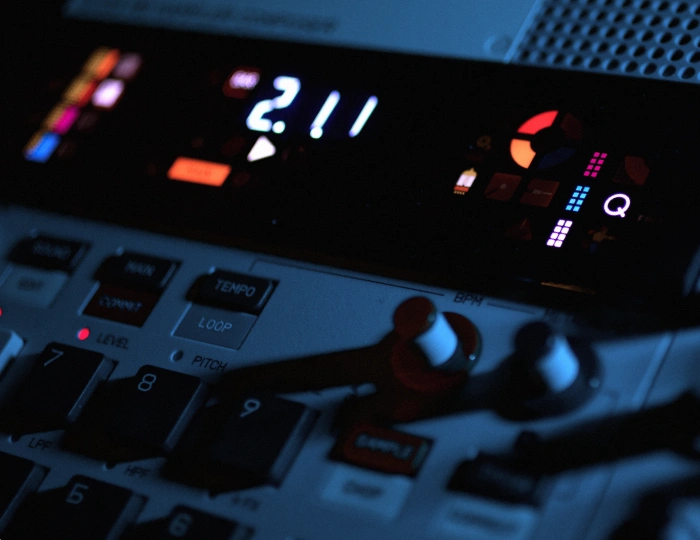
My wishlist continued to morph each week as I changed my mind repeatedly on what the best sampler would be for me. In the end, the company the spurred my plans for making music for fun was the same company that helped introduce simple gaming back into my life. The EP-133 K.O. II — the upgrade to the PO-33 K.O! — looked to be exactly the right device for me. After finding some better walkthroughs of the device, such as someone sharing the unique way it handles music creation, or another sharing that it offered midi control, I realized that instead of having to buy multiple devices for a cumulatively higher price, I could get one device for a little more money and have most if not all of my needs met without any additional purchases.
I guess I got the EP-133 at the right time, because right before I made my purchase they came out with the 2.0 Champions update and later the 2.5 update to add long-requested features to it that made it even better than I had seen reviewed in all the older YouTube videos. The device also was upgrade to double its storage space, making it even more future-proofed than I had original expected. A month or so after that they released the EP-136 K.O.–Sidekick that met my audio interface and mixer hopes and combined them in one tiny add-on device!
I feel that I’ve babbled far too long, but I’m really excited to be able to finally get the goofy little beats in my head into something real and less annoying than taps on the steering wheel or weird mouth sounds. My setup now is the following:
- K.O. II as the main hardware workstation
- Monoprice 606607 Midi Keyboard Controller plugged into the MIDI In port of the K.O. II to play notes in an easier-to-understand method than the calculator-style keypad of the K.O. II
- iPad (A16) acting as a synth rack via AUM and using pedal effects like Rymdigare and Other Desert Cities
- K.O.-Sidekick acting as an audio interface for the iPad and audio input for the K.O. II and Playdate
- Zoom H1n as the recording device for the mixed audio
- Beats Studio Pro headphones to monitor the audio
Now look, I’m still pretty terrible with this thing. I have so much to learn about making music and how these tools work, but this is the first time I’ve used music-making devices that haven’t frustrated me. I’m excited to play with these things, even if they’re simple toys that I’ve seen enough people online claim no self-respecting musician would use as their primary device. I like the limitations and the creativity that it will require to overcome or manage. It’s fun having hobbies that aren’t meant to make money as a side hustle.
Anyway, here are some small clips of my poorly-mixed and theory-ignorant early attempts at making something resembling music. I put them here instead of on YouTube because of their recent claim that they have the legal right to steal music for AI training. I had to make them thumbnail size because my hosting provider has a 25MB limit on files.
Footnotes
-
I have since picked up playing the recorder again and have gotten decent enough with it to stumble through some basic songs. I figure I’ll probably never get actually good with it, but the level of skill I have now makes me happy. ↩
-
I also learned that a lot of setup work is rarely or never recorded by these artists, obscuring how much work is actually required to build a song, but the point about the ease at which one can build a song on a Pocket Operator still stands true. ↩
-
I realize that the Playdate was only designed by Teenage Engineering and that the PO-33 is not yellow but rather that is the CA-X yellow case, but I like the poetry of the moment. ↩